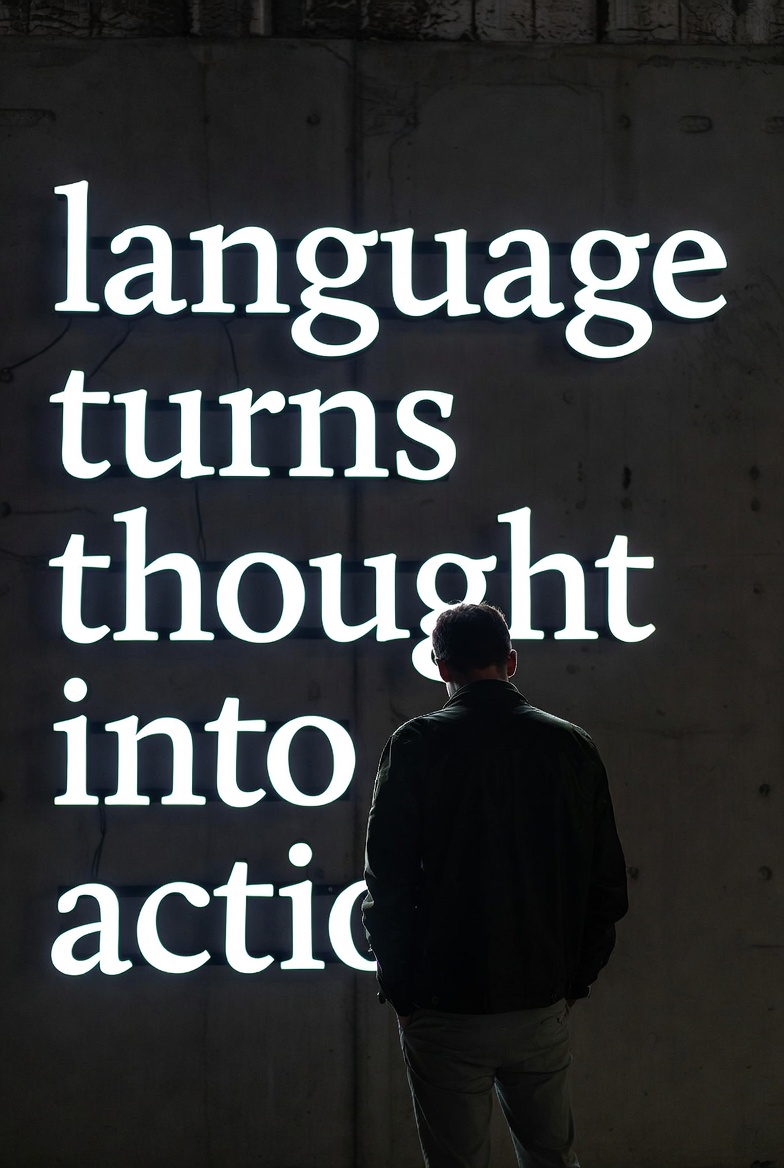
The unified circuit, Pocket Brain’s interaction language turns thought into action
Imagine directing your AI with a glance, a whisper, a subtle tap, and a confirming buzz. No screens demanding your focus. No voice commands shouted across crowded rooms.
Just intuitive flow that feels less like operating a device and more like extending your own thought.
This is the promise of Pocket Brain’s interaction language, a multimodal circuit where gaze, voice, micro-gestures, and haptic feedback fuse into something greater than the sum of their parts.
Each modality claims its territory, excels in its niche, yet operates independently to ensure that when one path fails, others remain open.
The result is not just resilient design but emergent intelligence, a system that amplifies agency while refusing to overwhelm.
The genius lies in division of labor.
Gaze through the frames provides passive context, eye-tracking that selects interface elements or identifies objects in your field of vision without requiring conscious effort.
This is non-verbal targeting at its finest, reducing cognitive load for quick tasks.
Voice through the node handles explicit commands, wake-word activation followed by natural speech that captures high-bandwidth input for complex queries.
Beamforming microphones isolate your voice even in subway tunnels or coffee shops, environments where lesser systems collapse into unintelligibility.
Micro-gestures via the ring enable precise, hands-free actions.
Point and twist to scroll.
Flick to dismiss.
Confirm with a subtle tap.
These spatial manipulations shine when your hands are occupied, driving or cooking or carrying groceries, situations where voice feels awkward (even those who prefer voice know the moment a quiet room becomes a rush-hour train) and touch screens are impossible.
Haptic vocabulary delivered through node, ring, or slab completes the circuit with discreet output. One buzz means yes. Two means no. A rolling pulse signals the system is thinking. This Morse-like feedback confirms actions or alerts subtly, no visual or auditory distraction required.
Why does this division create perfection?
Because each modality excels precisely where others falter.
Input versus output.
Verbal versus non-verbal.
High-bandwidth versus high-precision.
When you combine gaze plus voice, accuracy increases significantly, the kind of reliability that turns experimental interaction into daily habit.
The full circuit achieves what single-modality systems cannot: seamless adaptation to context, resilience against failure, and emergence of capabilities that no individual channel could provide alone.
The unified language operates through a central interpreter running on the slab’s neural processing unit, fusing inputs in real time.
Look at your calendar, say reschedule, and the system triggers a haptic confirmation buzz while overlaying augmented reality options through your lenses.
The personal model handles disambiguation, understanding from months of adaptation whether you meant this Thursday or next, morning or afternoon, based on your historical patterns. In a meeting, glance at your notes, swipe with a micro-gesture, say summarise, and receive a haptic done pulse.
The transcript appears in your lenses while participants remain unaware you consulted an AI. Offline scenarios reveal the circuit’s true elegance.
Voice fails in a loud subway?
Switch to gaze plus gestures, achieving highly accurate success rates without touching the node. The system degrades gracefully, never catastrophically.
This reduces errors significantly compared to single-modality approaches More importantly, it feels natural, like thinking with your body rather than operating a machine.
Traditional voice-only systems force you into their rigid grammar, their acceptable phrasings, their limited patience for ambiguity.
Pocket Brain’s multimodal circuit meets you where you are, accepting input through whatever channel makes sense in the moment, inferring intent from the full context of your behavior rather than parsing isolated commands.
Independence guarantees resilience. Each modality runs autonomously by design. Smart frames use local sensors, no node dependency. Voice node carries its own battery, survives independently for hours. Ring gestures rely on inertial measurement units, fully offline capable.
Haptics on the node provide last resort feedback when all else fails. This architecture attacks single points of failure at the root.
If voice fails in noise, you still have gaze and gestures. If the node battery dies, the smart frames and ring continue functioning.
Real-world implications extend beyond convenience and into security. In surveillance scenarios, where every input and output is logged and mirrored for control, independent paths mean no single breach exposes the entire circuit.
Compromise one modality and you gain access only to that channel’s limited data.
The haptic vocabulary reveals nothing about what you said.
The gesture log tells nothing about where you looked.
The gaze tracker knows nothing about which gestures you made.
Even total device compromise yields only fragments, encrypted and context-free, useless for reconstructing the full picture of your interactions.
This matters because Pocket Brain’s interaction language embodies the core ethos of augmentation without overload.
The multimodal circuit reflects the three creativities Akio Morita demanded of Sony: technology, planning, and marketing, never one without the others.
This is a thinking partner that adapts without overwhelming, that provides exactly the right channel at exactly the right moment without forcing you to consciously choose between them.
Also, the architecture scales forward naturally. The smart frames of 2026/7 are the beginning, not the destination. As AR lens technology matures (as micro-batteries shrink, as waveguide optics reach the resolution the vision deserves) the node-powered ecosystem transitions seamlessly from frames to true ambient lenses.
No redesign. No new paradigm.
The same interpreter, the same division of labor, the same independence principle, simply delivered through a more invisible form. Beyond lenses, the circuit is designed to welcome whatever comes next.
Should neural input eventually mature, it arrives as just another modality: one more specialised channel the interpreter accommodates, one more path that fails without breaking the others. This is future-proof design, built on principles rather than particular implementations.
Pocket Brain’s unified circuit offers something rare: a resilient, adaptive flow that makes artificial intelligence feel like you, not like an application you must operate.
*The gaze provides context. *
*The voice carries intent. *
*The gestures add precision. *
The haptics close the loop.
Together they form not a collection of features but a language, a vocabulary of interaction that becomes fluent through use, natural through repetition, indispensable through reliability.
This is the circuit that thinks like you, that fails gracefully when challenged, that adapts continuously to your patterns.
This is augmentation designed for sovereignty rather than servitude, for independence rather than dependence, for flow rather than friction.
With Pocket Brain, the circuit is complete. The language is unified. The amplification of human capability proceeds without the diminishment of human agency.