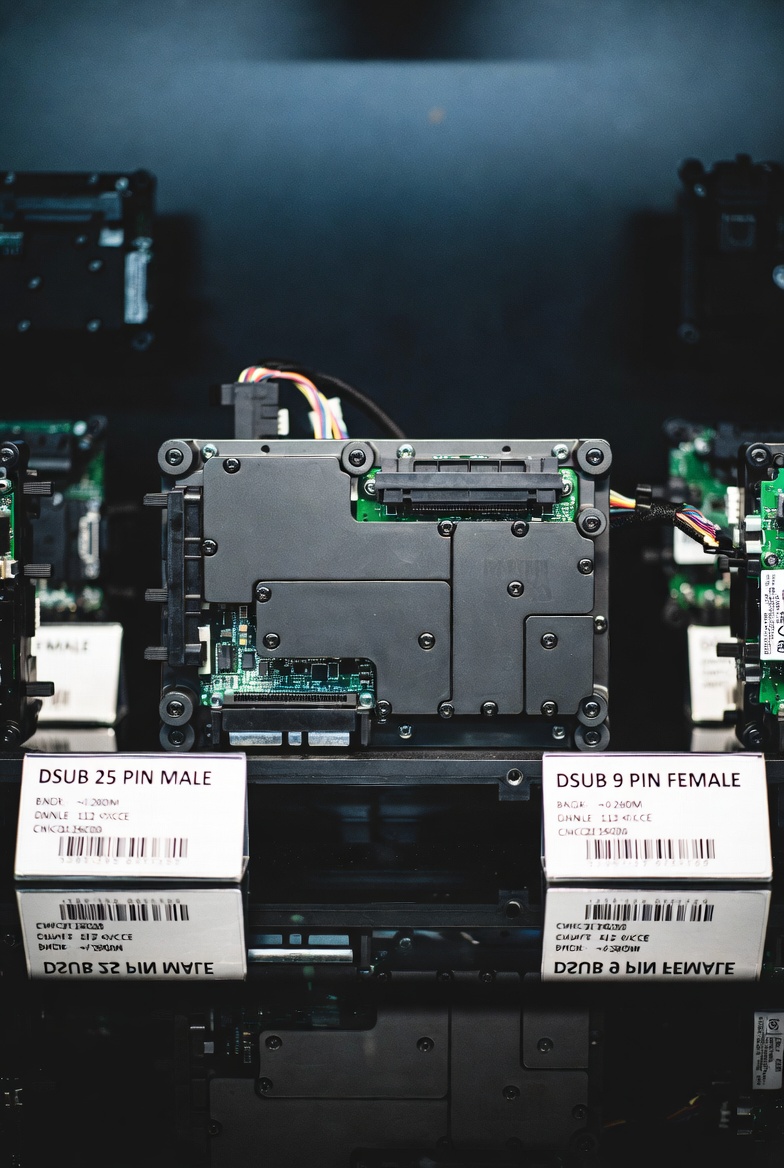
The focus here is fundamentally to ask, can it be done.
Then like most things in life, compromises may be needed to bring this into being.
Pocket Brain slab: parts wish list (2026–2027 timeline)
From passive listener to active thinker This wish list represents moving from a device that simply stands by to one capable of sustained thought. While the target remains a seamless 24-hour listening runtime for mixed usage, the true engineering challenge is enabling 5+ hours of continuous, deep-thought inference on a local 13B-parameter model.
What 13B Local Inference Unlocks
Cloud-dependent assistants (Humane’s Ai Pin, and the emerging screen-free category OpenAI is pursuing with Jony Ive) risk three predictable failure modes: latency, privacy exposure, and offline fragility.
The Problem with Phones
Smartphones demand visual attention 150+ times per day. Every notification, every query, every context switch requires you to pull out a screen, unlock it, navigate an interface, and visually verify the result. This works for browsing and media consumption, but breaks down when computing needs to happen around your life rather than *interrupting *it.
The Ambient Alternative
A screenless AI slab inverts this model: the computer lives in your bag, thinks continuously, and surfaces information through voice and lightweight AR overlays. Gartner predicts 30% of AI interactions will be screen-free by 2027, not because screens disappear, but because high-frequency, low-complexity tasks (calendar checks, message drafts, contextual reminders) migrate to ambient assistants that don’t require hand-eye coordination.
Delivering this experience requires solving a problem no consumer device has tackled: sustaining 12-15W of continuous AI inference in a pocketable form factor for an entire workday. That’s the engineering gauntlet.
The engineering challenge To achieve this, not for efficient idling, but rather for a 12–15W sustained workload. This reality pushes the timeline to late 2026/2027 to align with the volume production of two critical technologies: solid-state active cooling and next-gen high-density energy cells.
The execution strategy The build prioritises efficiency and modularity for BBK-style manufacturing scale, anchoring the architecture on the Holy Trinity of the 2026 supply chain: Qualcomm’s Snapdragon 8 Elite Gen 6, CATL’s semi-solid-state batteries, and YMTC storage.
However, the make or break factor is thermal management. Passive vapor chambers alone can no longer suffice.
Sustaining this runtime requires a hybrid thermal stack: a large-area vapor chamber to instantly spread heat from the core, coupled with a Ventiva Ionic Cooling (ICE) engine to actively exhaust it.
This combination ensures thermal equilibrium under real-world AI workloads, not just peak datasheet specifications
Core structural components:
-
Chassis/Frame: Matte-black recycled aluminum alloy shell (unibody heatsink)
-
105 × 65 × 20–24 mm,
-
Weight ~315–390g (Density is the new luxury).
-
Cooling System: active solid-state lung (Ventiva ICE9 or custom variant) The tech: silent, solid-state air movement using electrostatic fluid acceleration. No fans, no moving parts, no whine.
-
The Implementation: A cross-flow or chimney duct design utilising the device’s 22mm thickness. Air is pulled in silently through side micro-perforations and exhausted out the top.
-
Why? Passive cooling saturates after ~20 minutes of 13B model inference. A mechanical fan is too loud and introduces failure points. ICE provides the high static pressure needed to push air through dense internal fins without the noise, keeping the NPU at peak performance for 5+ hours of continuous dialogue.
-
The chassis itself acts as a thermal buffer (thermal mass) to absorb burst queries before the active cooling ramps up. The extra weight is the cost of carrying a server in your pocket.
-
IP69 sealed, magnetic pogo-pin access for charging.
Power & energy
-
Battery Pack: 16,000 – 18,000 mAh Semi-Solid-State Lithium (CATL / WeLion high-density custom cell).
-
The Math: Continuous 13B inference draws ~12–15W. To hit a 5-hour minimum runtime plus system overhead, we need ~65–75Wh of energy.
-
Charging: 100W+ wired (Pogo/USB-C). Wireless reverse charging is downgraded to emergency trickle only (5W) to preserve thermal headroom.
-
Why? You can’t cheat physics. Deep thought requires deep power. This battery turns the device into a dense power brick that thinks.
Compute & memory
- SoC/Chipset: Qualcomm Snapdragon 8 Elite Gen 6 (TSMC 2nm N2P; 8 Oryon cores @ 4.5 GHz; Hexagon NPU ≥120–130 TOPS).
Why? Powers local 13B models with low latency and high efficiency, handling voice-to-intent conversion on-device.
-
RAM: Unified 24 GB LPDDR6 (minimum)
-
Why? We treat RAM as VRAM here. 16GB is the floor for a phone; 24GB is the floor for a brain that holds a 13B model + a 32k context window without swapping.
-
Storage: 2 TB UFS 5.0 (10.8 GB/s read/write; inline biometric encryption).
Why? UFS 5.0 isn’t just for files; it’s virtual RAM. It allows us to cold boot specialised AI agents in <0.8 seconds, making the system feel like one cohesive intelligence rather than a collection of apps.
Imaging & sensors - decoupled vision
-
Built-in: none (zero camera bumps, zero privacy ambiguity, maximum internal volume for battery/cooling).
-
The Eye (optional Kit): a magnetic, coin-sized wearable camera clip (Sony IMX9 series, 50MP). Streams raw 4K video/photo data via Wi-Fi 7 Direct to the Slab for real-time NPU processing.
-
Why? The slab lives in your pocket; it can’t see. The Eye clips to your shirt or bag strap to capture your POV frictionlessly.
-
Benefit: keeps the slab pure (thermal/battery focus) and allows users to physically detach the camera for privacy without powering down the AI.
Connectivity & misc
- Wireless stack: eSIM (always-on) + Wi-Fi 7 + Bluetooth 6.0 (for earpiece/ring sync).
Why it matters: bluetooth 6.0 introduces channel sounding, which provides secure, precise distance measurement.
*The Application: *It acts as a proximity lock. If your connected ring or earpiece moves more than 2 meters away from the Brain slab, the device automatically locks down or requires re-authentication. It’s an invisible, passive security layer that prevents snatch and grab data access.
-
Biometrics/Security: voice/vein-scan enclave for 2TB secure storage. (yes, the vein-scan is real and already exist, see Samsung’s & Qualcomm).
-
The Tech: a dedicated zirconia ceramic ring housing a PPG/IR sensor array (like a miniaturised Oura/Ultrahuman sensor stack) specifically tuned for vascular pattern matching.
-
The UX: you put the ring on; it identifies you via vein pattern once. From then on, it broadcasts a secure, rotating token to the slab.
-
The Security: the slab itself has no biometric sensors, it relies 100% on the Ring.
Ring on finger + near Slab = Unlocked.
Ring taken off = Locked instantly.
Ring too far away = Locked instantly.
-
Why? This removes the need to grip the slab a certain way. You can leave the slab in your bag or pocket and just speak; it knows you are you because the Ring is on your hand. It enables truly hands-free, ambient identity.
-
Theoretical battery for vein-scan ring (2026–2027): flexible thin-film all-solid-state lithium, 30–40mAh capacity at 3.9V nominal (~120–156mWh), 600–800Wh/L density (advanced TDK/Ilika-style).
-
Curved 0.8–1.2mm thick to fit zirconia ring. Supports a number of days runtime via duty-cycled PPG/IR (initial scan + hourly re-verification, ~50–100µW average) and low-power BLE 6.0 token advertising (~10–20µA average).
-
Wireless charging in case; fail-safe low-battery alert/lockout.
All in all
Density over delicacy: At ~390g, this isn’t a phone, it’s a thinking tool. It will sag a shirt pocket; treat it as jacket or bag gear.
Living warmth: Even with Ventiva cooling, the chassis settles at 38–40°C
during sustained inference. It won’t burn, but it will feel warm.
Silent at a premium: Ventiva ICE modules cost $30–$50 vs. $5 for mechanical fans, but we rejected hybrids entirely.
No whine, no dust ingress, no moving parts.
Manufacturing reality: the scale play
This only works with **Tier-1 supply chain leverage, **think BBK, Xiaomi, or Samsung scale. At 1M+ units, the full kit lands at $820–$1,020 per unit (~30% below small-run costs).
Component cascade:
-
AI Brick (the muscle): ~$550–$650 (down from ~$780–$850) Qualcomm volume tiers + CATL/BYD battery scale
-
Lenses (invisible AR): AR Contacts (e.g Xpanceo, post-launch): ~$800 pair initially (premium early-adopter pricing; long-term drop potential to ~$400)
-
Pivot Alternative: Lightweight AR Glasses (e.g Even Realities G2/G3 successors): ~$600–$700 (regulation-free, available sooner)
-
Earpiece: [Details deferred to earpiece node article]
Why scale? millions of annual device volume across a portfolio = $200–$300 saved per kit via existing YMTC/Samsung storage contracts and Snapdragon negotiation leverage.
You can’t build this efficiently without that anchor.
Retail target: $1,499–$1,799 (excluding optional AR eyewear) Slots between mid-foldables and flagships, trade screen creases for always-on AI.
The big risk: AR lens FDA timelines. Without regulatory clearance, the full kit stalls. If AR contact lenses fail FDA clearance, pivoting to lightweight AR glasses, such as Even Realities G1/G2 successors offers a viable, regulation-free alternative with similar subtle heads-up display capabilities and no medical device hurdles.
The real question isn’t whether the components will arrive on time, Ventiva ICE9 ships in Dell laptops today. Snapdragon 8 Elite Gen 6 Pro samples circulate OEM labs now. CATL’s semi-solid cells target 2027 small-batch production; but prioritising EVs, not consumer electronics.
The technical risk is allocation: will battery makers prioritise a niche device over EV contracts?
The market risk is timing: OpenAI’s Jony Ive device targets 40-50M units in H2 2026, validating screenless AI but fragmenting the category into earbuds, pens, and slabs.
The Pocket Brain positions as the *workstation tier *of screenless AI: 390g of sustained 13B inference where OpenAI’s earbud and Meta’s glasses offload to cloud. It’s the only form factor that doesn’t compromise local inference, but pays for it in density.
The catch: AR glasses from Even Realities and Xreal won’t optimise for a niche slab until it has scale, and users won’t buy the slab without mature AR output. OpenAI sidesteps this by building voice-first calm computing; betting on visual-ambient hybrid, which doubles the adoption friction but offers richer interaction.
Humane’s AI Pin failed while Meta’s Ray-Bans thrived by looking normal.
This isn’t a phone without a screen; it’s infrastructure that lives in your bag, thinks continuously, and pushes output to your glasses.
The hardware gamble is thermal and battery allocation.
The bigger gamble is convincing users that the future of computing isn’t in their hand, it’s in their pocket, on their ear, and eventually, their line of sight.